Like last year, I've been keeping track of the books I read using Goodreads. I've discovered many great books on this site - I highly recommend it! Also, if you like tracking things and making lists, like I do, you will love the features on this site designed to help you do that.
I read almost double the books I did last year, and continued with a range of nonfiction, literary fiction, sci-fi, speculative fiction, and fantasy. Unfortunately I still have five books on the go right now, and I probably won't finish them all before New Year's Eve, but I'm quite happy with my progress anyway.
Last year I had an idea to work my way through Dennis Shasha's book: Puzzles for Programmers and Pros. Well, it's been a busy year and I didn't quite get around to it. But, since we had a holiday this week, I had some time to play around and managed to finish another one. As promised, I'll write about it here.
In this problem, you have some advisors, some who always tell the truth and some who may or may not lie. The idea is you can make a bet, from $0 to $100, on whether a number on a piece of paper (face down) is 0 or 1. The goal is to figure out how much you are guaranteed to win.
In the first case, you have two advisors out of four who always tell the truth. You start with $100. I figured out that the amount you are guaranteed to win is $400. Here is how I worked it out:
The second part is a bit trickier: how much are you guaranteed to win if you start with $100 but there are only three advisors, and only one of them always tells the truth. The answer I got is $266.69 - which I got by working out the different cases you would encounter and working through the possibilities. I used a flow chart to do that:
I'm enjoying the book and hopefully will get around to posting a few more problems soon!
This is the first year I've kept a close track of my non-work-related reading for the entire year. I've been using www.goodreads.com; I like the way you can combine your social networks (i.e. your facebook connections) with your book lists and the easy way you can track books you are currently reading, have read, and want to read.
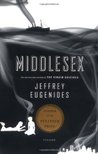
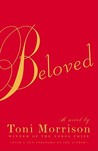
I haven't finished everything I wanted to get to this year (but realistically this would be impossible, there are 300 books on my long list and lately I've been starting books that aren't on either that or my shortlist!). Here's a quick list of what I did read:
I covered a good range of short stories, science fiction, fantasy, and straight up fiction, as well as nonfiction, YA, and graphic novel. I enjoyed just about everything, but to be honest Reamde was a bit of a disappointment. I'm eagerly awaiting the next installment of Margaret Atwood's Positron series!
Last week I finished Reamde, the latest offering from Neal Stephenson. To tell the truth I was a little disappointed, since I enjoyed his last book Anathem so much (and also wrote about it on this blog).
What always brings me back to Stephenson's books is the way he plays with ideas about commerce, currency, and technology (sometimes the intersection of all three). In Reamde, he again picks up on these by setting the novel around a new game (which reminds me of much of what I've heard about Skyrim) and how different groups of people exploit it to generate revenue (the 'gold miners' who find virtual gold and sell it for real-world cash). When one faction of players creates a virus to scam others out of their gold, all hell breaks loose as both a virtual and real-world conflict ensues.
Unfortunately, Stephenson gets distracted from the interesting ideas in his book by trying to create a cliched commercial thriller. In particular there are a few problematic points:
there is a group of terrorists that somehow gets included in the action; they don't seem to add anything to the plot except action
Stephenson adds plenty of gun battles to keep the action going (however feels the need to discuss the workings of said guns down to the most minute detail, resulting in several skim-worthy passages right in the most action-packed parts of the book)
an international cast of characters adds intrigue, but it's an unfortunate assumption that every one of them can communicate seamlessly with every other character
one of Stephenson's main failings in the past has been his ability to wrap up an ending. I felt he had been improving, especially with the conclusion of Anathem. Here however he gets a bit maudlin and a bit too neat. For example, despite featuring several strong, independent-minded female characters (yay!), Stephenson finds the need to ensure they are all romantically involved with one of the male main characters by the last chapter of the book (ick).
All that said, the book is an entertaining read and I don't regret the time I spent on it (and given the size, this was a non-trivial amount). If you are going to give it a go, just make sure you set your expectations appropriately.
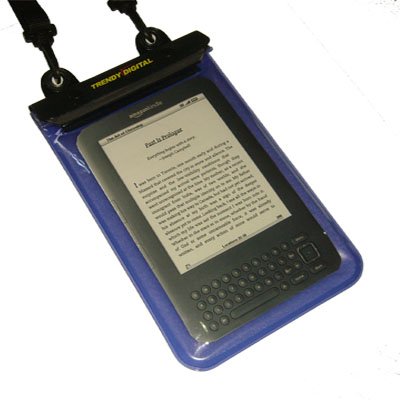
First post of 2012! I've been quite busy with the holidays and visiting friends and family, so I haven't had time to put much together for my blog. However I did get a Christmas present worth talking about: this waterproof case for my Kindle:
Why the need for such a funny looking case? Well, a few months ago my first Kindle suffered a bath time misadventure, and no amount of rice-bag drying would resurrect it. I loved my Kindle so much I got a second one, but did some thorough researching and decided to get this case to protect it from any further mishaps.
Yes, the straps are a bit hokey, and the seal at the top is basically a double zip-lock that rolls up and snaps, but I have now tested it and it's pretty awesome. I doused it pretty well with water and although there some got into the roll-up part of the case, none managed to get inside and my Kindle was safe. From the other reviews on Amazon, yours should be too should you decided to take the...plunge. Happy New Year! :-)
This year has gone by super fast, I can't believe it's almost over. To help ring in the New Year, I thought I'd close it out by giving an update on some of the highlights.
Travel
This year was a whirlwind of trips, both for professional and personal reasons. I racked up quite a few airmiles traveling to:
Reamde, which I'm still working on but hope to finish before New Year's.
I'm still immensely happy with my Kindle but have not made the leap into the tablet realm yet. We'll see where 2012 takes me on that front.
Blog
In November I attempted to participate in NaBloWriMo, and almost succeeded in writing a post every single day of that month (I missed one or two). I've been able to keep it up in December, although I've been writing more like every other day and with vacations and holidays I've been slacking off a bit. Here are the top 5 posts on my blog this year:
I've been looking at Dennis Shasha's book "Puzzles for Programmers and Pros", which combines two of my favorite activities: programming and puzzles! Going through the book is fun and a good way to brush up on those languages one doesn't use on a regular basis, and I may post my experiences with it going forward. Have you tried the puzzles in the book? What did you think?
I'm in the middle of Silently and Very Fast by Catherynne M. Valente. So far it's intriguing - the style is different from most books I read. It's more like a collection of related vignettes than a single story with a linear plot. I think the narration matches the writing style very well too. Definitely worth a listen!
As an aside, the Clarkesworld Magazine seems very cool too. Seems like I'll be adding it to my regular reading routine!
I just finished "In Other Worlds: SF and the Human Imagination", by Margaret Atwood. Basically this is a collection of essays, short (very short) excerpts of Atwood's fiction in the genre, and what I gather once was intended to become the author's PhD thesis.
I enjoyed the writing, as always; Atwood's style exhudes her wry wit and there are sprinklings of her dry humour throughout the book. Other reviews I've read lament that there's really nothing 'new' here - if you are quite familiar with SF already you will probably know much of what she describes here. On the other hand, if you are not familiar with SF (or very well-versed in fiction in general), you will probably miss a lot of the references she makes.
Atwood focuses on the more speculative side of SF rather than the hard-science side. I would have liked to hear more about her thoughts on authors such as David Brin (his idea of 'Uplift' having some similarities with her use of genetic manipulation in "Oryx and Crake", for example), or other authors like Benford or Bear. Still, this book was like a romp through familiar territory for me, and I thoroughly enjoyed it. If you have fond memories of reading SF as a kid you will probably like it too. Worth the read, but if you have something more pressing I would get to that first.
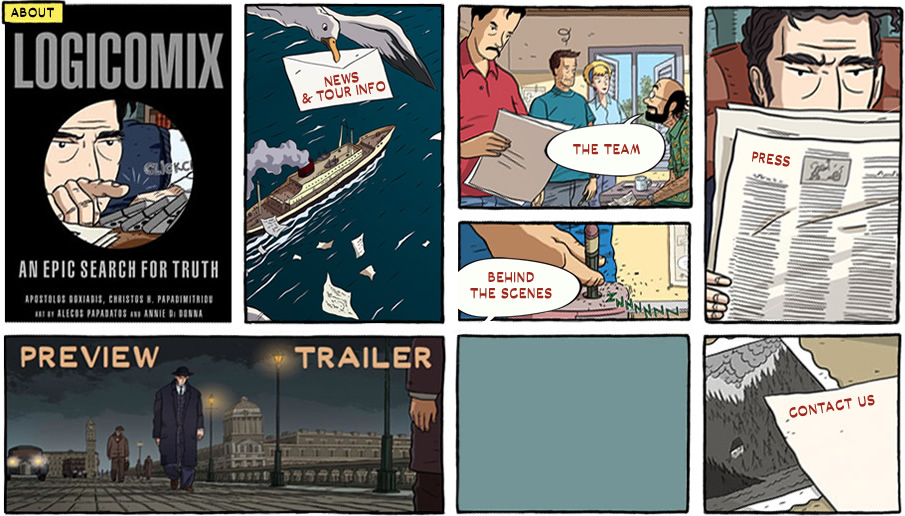
This morning I finished "Logicomix", a graphic novel I picked up in Portland at Powell's Books.
I really enjoyed the book and finished the entire thing in about six hours. The story takes place on three levels: first, there are the authors contemplating how best to tell the story. Second, there is Bertrand Russel giving a lecture in 1939 to US isolationists on logic, and third, there is the story of Russel's life as told through his lecture. The 'meta' aspects of these layers of story is quite unique and engaging, and help the authors portray some of the philosophical ideas more easily and in a more consumable format for lay people.
If you're looking for a fast read, this is a fun book that lays the groundwork for modern CS. Actually near the end Christos Papadimitriou mentions that he would like to do another novel concerning Von Neumann and Alan Turing, which I am eagerly awaiting!
A few months ago I had the opportunity to attend Presenting Data and Information, a one-day course taught by Edward Tufte. If you have an interest in user interfaces, HCI, or data analysis, this is definitely the course for you!
The main point Tufte makes is that there is an abundance of poorly presented data that leads to bad business decisions. He provides many examples, the most convincing being the Columbia shuttle accident, where a risk assessment using data that was ambiguous at best was presented in such a way as to lead NASA engineers to approve the shuttle to land. The course provides tools and guidelines for analyzing data and presentations, presenting your own data more effectively and convincingly, and analyzing the design of the interfaces we work on so that we can make better business decisions.
Tufte opens the day with a visualized piece of music, like this one:
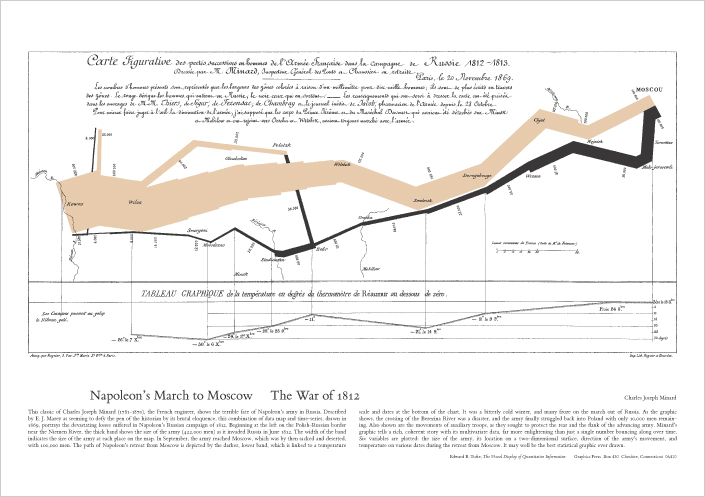
This is used to illustrate how including multiple types of information in a single graphic/visualization can be much more useful than what is usually done - narrowing down information until we have only one or two metrics shown. Here the visualization helps the consumer distinguish the different instruments heard, the length of the notes, and value of the notes themselves (a low C from a middle C, for example). This theme occurs again and again throughout the course - Tufte also uses the Minard Map as a good example of how to visualize multiple data points and metrics in a single place:
Edward Tufte has a reputation for disliking Powerpoint (OK, he did write an article on how it is 'evil'...). He has a section on this in his course, but to me it seems his dislike is not so much for the tool itself as much as how it is used. Specifically, he states that the problem is:
people often show too little data on slides (due to the limited space they provide)
many people simply re-read the bullet points when presenting, rather than supplementing them with additional information
powerpoint slides can be dictatorial/autocratic: the leader often reads the info to the audience, but the audience doesn’t have the notes/background material that went into creating the slides, only what is presented on them
Of great interest to me was the section of the course on mobile interfaces. Most notably, Tufte has provided some criticism on both iPhone and Windows Phone 7. He appears to like the former much more than the latter.
There are some really nice things about how Tufte presents the material in this course. First, I like that he shows pictures and talks to/about them, rather than showing bullet points and reading from them. The course ends up much more like a dialogue than like a lecture because of this. Second, students are given all four of Tufte's books on data visualization, which is a great resource that helps continue attendees' education well after the course has ended. Finally, Tufte uses all four books liberally throughout the day, so attendees get a good overview in the content contained in each; now when I have a question or point of interest I need to look up, I have a better idea of where to find the answer in his books, which has saved me a lot of time since.
Overall I would highly recommend this course. The training on presenting data is very useful - I've implemented his recommendations and received positive feedback on several of the reports I wrote using it. The information on layouts and interfaces was also very helpful. My one hope is that more technical people outside of user experience designers and researchers find the time to attend - engineers of all sorts, from developers and testers to Q/A engineers could all benefit.
In the past few months I've been browsing Seattle's many excellent second-hand bookstores and recently picked up two anthologies of Science Fiction comprised entirely of stories by female authors.
So far my favorite has been Octavia Butler's "Blood Child". Although I read a lot of Sci-fi, I haven't read any of Butler's work before, and I think I've been missing out.
In an effort to get more reading in I've decided to multitask: I'm working my way through "Guns, Germs and Steel" on the side, and am also meandering through the latest Margaret Atwood ("In Other Worlds"). So far she's mentioned Homer, Leonard Cohen, and Ursula Le Guin all within a few pages of each other, so I would say I'm quite pleased with it. :-)
I've had several conversations recently (and coincidentally it seems) about how female Sci-fi authors don't seem to feature [m]any positive/strong male characters in their work. I disagree in general, but it made me think about how even today there are still not many positive/strong female characters in Sci-fi, and how growing up it was finally refreshing to encounter them in books like Atwood's, or Le Guin's. One exception I can think of is Gregory Benford's book "Cosm" which features a female physicist as the main character, but I'm having a hard time coming up with other examples. Can you think of some? I'm always interested in recommendations!
**This post sort of coincides with the arrival of Ada Lovelace Day (on October 7 this year, get ready!).**
I've walked past Ada's Technical Books a few times in the last few months and noticed some very cool window display items (such as Neal Stephenson's Reamde), but I was always there when it was closed. Yesterday however, I happened to be in the area when it was open and got a chance to finally browse inside.
Outside Ada's Technical Books on Capital Hill in Seattle, WA
This store is so neat! It's named for Ada Lovelace, widely thought to be the first female computer programmer. There were little references to technical women throughout the store, including a book about Grace Hopper in the biography section, greeting cards featuring technical women at the front of the store, and of course the name of the shop itself. Besides this, there is a very nice selection of technical books, quirky puzzles and games, biographies about famous scientists, programmers, and mathmeticians, and even a small sci-fi and young adult section. In the latter I spied a Marvel comic version of Orson Scott Card's Ender's Game - have any of you read it? Would you recommend it?
I really enjoyed my visit to this shop and if you are in the area, I'm sure you will too. :)
I promised a review of my Kindle in my last post on e-Readers, but have been totally swamped at work and haven't had time to even think about it until now. I still don't have the time or energy for a full post, but wanted to give a brief update on how I'm doing with it.
So far I finished one fiction book: Vernor Vinge's "A Fire Upon the Deep". I had previously bought a hard copy from Half Price Books (I'm not a big book buyer, being a library lover, but this is my favorite bookstore hands-down). I found I read just as much post-Kindle reading as I did pre-Kindle, but one disappointment is that e-Books are sometimes missing some of the little extras that exist in the hard copies (and often cost the same). For example, Vinge's book postulates a theory wherein the galaxy is divided into 'zones of thought' (basically, computers work differently in each zone, and I wondered if he was trying to put forth the idea that P=NP might be true in some galactic zones and untrue in others - a neat idea). There is a diagram at the beginning of the book that shows what this would look like, but it is absent from the e-version. I think this would probably make the ideas in the book harder for readers to understand, or lead to misconceptions. Differences between e- and hard copies of books is something that deters consumers and should be avoided.
I'm also reading some non-fiction, including "The Boglehead's Guide to Investing", which is perfect as an e-Book. Kindle has a great interface for quickly flipping through books by chapter, it's easy to use the table of contents and also search through books or place bookmarks for easy access later. Kindle might even be better for reading non-fiction than it is for fiction, but I'm undecided on this point so far.
One thing that I only discovered recently was how to access footnotes. In reading "The Girl Who Kicked The Hornet's Nest", I realized there were tonnes of footnotes, but only once I was about a third of the way into the book. I think Kindle could do a better job of making the footnotes more obvious on the page. Also, instead of flipping you to the back of the book, it would be nice if they could appear like dictionary definitions, which sort of pop up at the bottom of the page. This would make it easier to read footnotes at a glance just as you would in a hard copy book.
Finally, a note about the device itself - unless you have really great lighting, get the case with the built-in light. I find I use it about 90% of the time, since I often read in low-light and the screen's contrast makes it hard to see the letters. I got the case shown in the picture above, and really like it.
Anyway, I'm thoroughly enjoying the Kindle so far and have lots of books waiting in my queue. I still highly recommend this product!
Continuing on with my Cormac McCarthy addiction, I recently read "All the Pretty Horses". I've read reviews by others who said that this was the first book they felt they could really enjoy because of its slower pace and because it doesn't have the relentlessness of "No Country for Old Men" or "The Road". Unfortunately, I feel just the opposite and really prefer his more fast-paced works. Still, there are some really beautifully written passages and I really enjoyed this one nonetheless.
After finishing the McCarthy pretty quickly, I spent the rest of the summer slogging through Stephen Baxter's "Coalescent". It's really got an interesting take on evolutionary theory and covers a grand span of time, from ancient Rome to the far future, but man, is it ever slow. Baxter, get an editor! The first three quarters could have done with condensing.
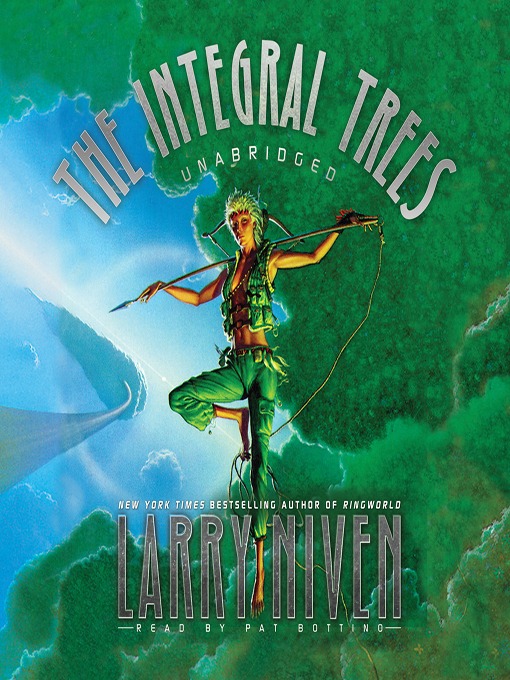
Whenever I'm on a plane I manage to get through a few books. This latest trip was no different and I had taken two books with me - Larry Niven's "The Integral Trees" and Cormac McCarthy's "No Country for Old Men".
Larry Niven is to be commended for the intriguing worlds he creates - most notably the Ringworld, a disc surrounding a star that supports life. In this book he hypothesizes what life would be like within a gas torus surrounding a neutron star, such that the environment would have very low gravity. Unfortunately, Niven's imagination for worlds is not matched for his imagination for characters; they always seem quite two dimensional to me and are very predictable. If you are interested in the different types of worlds made possible by the laws of physics, you'll enjoy his books, just don't expect too much in the way of plot and character development.
As for Cormac McCarthy, I wrote a post a while back about the film based on his novel The Road. Soon after watching the movie I read the book, which I absolutely loved. The same goes for his novel No Country for Old Men, which I also saw as a film before reading. The writing style is spare, like that of The Road, but in No Country you are given a little more insight into its characters. There is a little more dialogue and you are given a sort of diary from Sheriff Bell which poses some of the more interesting philosophical questions in the book.
Even with the leanness of the writing, the story is very compelling; the world is rich with complex characters and events. The book is dark, gritty, and thoroughly engrossing, and I finished it in short order. Highly recommended!
About a week ago I finished "Anathem", the latest novel by Neal Stephenson. There are lots of philosophical discussions and some interesting ideas, especially (without too-specific spoilers) about parallel universes, the nature of science versus technology, and symbolic versus language-based communication. Some say they found it slow but I felt the plot moved at a steady pace and was provocative throughout. Best of all, Neal Stephenson has finally managed to craft a solid ending. Well worth the ~900 pages it takes to get through!
Lately I've gone back to reading science fiction, having received my Dad's collection (at least in part). These books lean more toward speculative fiction and are quite different from hard or modern sci-fi.
The first one I read Samuel Delany's "Dhalgren":
In this book, "The Kid", a strange character who doesn't remember his name, winds up in a city devastated by a mysterious event. If I say any more I'm afraid I'll ruin it for you!
I can quite honestly say this is the weirdest book I've ever read. Cunningly crafted, the writing is compelling and very provocative. At 900 pages it will keep you occupied for quite some time, and figuring out just what it was about will plague you long after you finish it. I would highly recommend it.
The second book was R. A. Lafferty's "Past Master":
In this book, leaders of a sick planet go back in time to bring back the most honest leader: Thomas More. Again, saying more will likely ruin it, since the book is so highly plot-driven.
While completely different from Delany's writing, the book is interesting nonetheless. This book is basically all plot; the characters are entirely two dimensional and exist only to drive the plot. Events happen seemingly inexplicably, but it all makes sense in the end. I think. Worth the read, but many may find it hard to connect with.
What's next on my list? Back to non-fiction. I'm following up my attendance at one of the Massey Lectures by reading Margaret Atwood's latest: "Payback: Debt and the Shadow Side of Wealth".
I wish I'd had the energy to write about this when I got home last night, but seeing as it was midnight and I have to get up at 6am on weekdays, it didn't happen.
Anyway, last night I went to see Margaret Atwood deliver her second in this year's Massey Lecture series. I really like Atwood's writing and generally read everything she comes out with, so when I heard on CBC that she was coming I got tickets right away. I have to say, it was interesting to see how few people under 30 were there, especially as the cost for students was a paltry $10. Not that it wasn't well attended, the place was packed of course, but I just find it disappointing that youth don't seem to be interested in this kind of thing, especially given the times (the same is true of the symphony, but that's another matter altogether).
A surprise after the lecture was a generous spread of tasty snacks. It was tempting to get a book signed, but the line up would have taken ages. Given that it took until nearly midnight to get home anyway, it was probably a good idea to skip it. Still, I'm keeping my eye out for the book! Can't wait to read the whole thing and listen to the lectures on Ideas in November.
So, I saw this post on Slashdot and got to thinking... It occurs to me that the author of this post is asking for advice for his preteen boys, but may have preteen girls as well - how many people just assume girls won't be interested in science fiction? My own interest in science & technology was (in part) fueled by my voracious appetite for science fiction novels, and I was lucky to be able to visit a library once a week and choose whatever I wanted. Could we get more girls involved in science and technology by encouraging them to read science fiction? What books would you recommend for young girls to this end?
I'm thinking of some of the first science fiction books I read when I was younger, which I loved:
The Tripods (series)
The Foundation novels (Asimov)
Dune (Frank Herbert)
The Heechee Series (Frederik Pohl)
Fereinheit 451 (Ray Bradbury)
The Martian Chronicles, as well as other various short stories (Ray Bradbury)
2001: A Space Odyssey (A. C. Clarke)
The list goes on. These were nice set-ups for other authors I moved on to: Greg Bear, Gregory Benford, David Brin, Heinlein, George Turner, Clifford D. Simak, Philip K. Dick, Ursula Le Guin, and so on.