Showing posts with label career. Show all posts

Tuesday, December 31, 2013

Wrapping Up 2013

This year I'm spending New Year's Eve in Montreal, Canada.  Since it's around -20C, I'm having a quiet night in and reflecting on the past year.  I already posted about the reading I did this year, but since posting a year-end summary has become a bit of a tradition for me I'll continue that in this post.

Travel
This is probably the first year I traveled more for work than I did for holidays, but the holidays were longer so it balanced out.  Here's where the year took me:
  • UIUC, Urbana Champagne Illinois: March 2013
  • Victoria: Memorial Day Weekend, 2013
  • Ft Lauderdale, Florida: August 2013
  • Purdue University, West Lafayette Indiana: Sept 10-12 2013
  • Minneapolis: October 1-6 2013
  • Vancouver: October 11-13 2013
  • Iceland, France, and Monaco: Oct 17-Nov 1 2013
  • Cobourg, Toronto, Barrie, and Montreal: Dec 25 2013 - Jan 2 2014
I wanted to go to Europe and back to Japan in 2013 but only made it to Europe.  For 2014 I'm really hoping to get back to Japan again, maybe even for New Year's!  But I'll be starting 2014 with a quick trip to Las Vegas.

Professional Life
This year was even busier than the last, and involved a switch of teams, so there was lots to do.  Here are some of the highlights:
  • Attended this year's Grace Hopper Conference and worked on attendee engagement for my company
  • Presented as part of a panel on mobile vs. web app development, an industry experience panel, and a Student Opportunity Lab on Careers in Test at GHC13
  • Went on two College Campus Interview trips
  • Had a highschool student job-shadow me for a day
  • We shipped GDR3 for Windows Phone 8!
Blog
I've had bursts of activity on my blog with some droughts in between.  I try my best but it gets hard between my busy work and travel schedule as well as my hobbies and fitness schedule!  Here are the top five posts from my blog in 2013:
Other
Outside of work and travel, I've continued playing Frisbee and climbing.  This year I tried out captaining for the first time, which was super fun!  I'm getting better at bouldering too and did my first V3-level routes this year.  I'm hoping to get some skiing in this spring.

At Musee d'Orsay in Paris, France this October

Friday, March 15, 2013

Grace Hopper 2013 Proposals

This year I'm part of three panel proposals for GHC13.  GHC submission time always brings out the Women in Tech community, and this year was no different.  I joined the first proposal via a large email thread I got added to by a colleague and found it contained people from many great companies doing lots of interesting work!  For the second two proposals I put out requests on the Systers community, Twitter, and this blog for contributors and was overwhelmed with the response.

Here are the abstracts for our proposals.  Good luck to everyone else who submitted!

Native or Web, Which App Should I Build? A Mobile Developer’s Dilemma
Chaitrali Amrutkar, Georgia Institute of Technology
Tracy Chou, Pinterest
Sara Haider, Twitter
Kate Tsoukalas, Microsoft
Jane Wang, Etsy

The difference between the capabilities of web-based and native mobile apps is increasingly being blurred. While building an app for mobile users, developers need to make several considerations such as platform specificity, speed, user experience and commercial opportunities. This panel will discuss design principles, best practices, tools, security considerations and trade-offs in development of native and web apps on mobile devices. Our panel consists of experts from academia and industry.

Thinking Big about Careers in Test: Driving Your Career in Forward
Kery Laughter, Space Dynamics Laboratory
Kate Tsoukalas, Microsoft
Mirkeya Capellan, Sogeti USA / Pace University
Kavita Maheshwari, Trilixx.com
Iccha Sethi, Rackspace

Although the role of software testing in ensuring software quality is well established, the concept of a Test Engineer is relatively novel. There is an increased need for Engineers who can fill this role, but most institutions do not formally teach Test skills and many tech workers still do not clearly understand Testing. In this panel we explain technical specifics of Test skills, role, and directions for Test careers.

Thinking big about great mobile experiences: Smart development and test techniques drive us forward!
Rosario Robinson, Anita Borg Institute
Kate Tsoukalas, Microsoft
Leanne Waldal, OTIVO
Jennifer Wong, Wyley Interactive
Foghor Tashi, Nigerian Breweries Plc

As the number of mobile technology user is increasing, developers need to switch their thinking from designing applications for a desktop environment to cater to the specific needs, limits, and opportunities of mobile devices. However, many developers of mobile websites and applications repeat common mistakes that result in a poor user experience. This panel aims to raise awareness of these pitfalls and provide developers with strategies to overcome them.

Wednesday, March 13, 2013

GHC13 Panelists Needed for Mobile Tech Panel


Yesterday I wrote about a proposal I'm working on for GHC13.  Luckily I got a great response from my post and found more than enough panelists.  

However, I have a second proposal entitled "Thinking big about great mobile experiences: smart development and test techniques drive us forward!".  Here's the abstract:

"As the number of mobile technology user is increasing, developers need to switch their thinking from designing applications for a desktop environment to cater to the specific needs, limits, and opportunities of mobile devices. However, many developers of mobile websites and applications repeat common mistakes that result in a poor user experience. In this talk, we will:
  • Share important guidelines for developing better mobile applications and websites such as: planning principles, design modeling principles, coding principles and concepts and others.
  • Analyze and present common pitfalls, bugs, and design flaws made by mobile developers
  • Present strategies and techniques for testing mobile-focused products
  • Provide a forum for members of the audience to share their mobile testing/developer experience"
Right now we have two panelists and are looking for up to two more panelists and one moderator.

Please let me know if you are interested!

Tuesday, March 12, 2013

GHC13 Panelists Needed for Testing Proposal


I have a proposal for a panel for GHC13: "Developing Your Career in Test".  Our idea is to give real-world examples of testing techniques via demos and also to give advice on career development.  Right now we have two panelists and are looking to add:

- a moderator
- a Tester from another company (we are from Microsoft and Pace University)
- [optional] a panelist who tests as part of their role but whose title is not necessarily Test/QA

Please let me know if you are interested, time is getting short!

Monday, December 31, 2012

Last Post of the Year!

Happy New Year!  I hope it's been as interesting and fulfilling for you as it has for me.  Last year, I posted a summary of how the year went, so I thought I would do the same this year.  I've already posted about the books I've read this year, but here's a bit more about my travels, professional milestones, and hopes and to-dos for next year!

Travel
I didn't get as far and wide as I did in 2011, but I did manage to get to:
  • New York (June 30 - July 4 2012)
  • DC (September 30-October 3 2012)
  • Baltimore (October 3-6 2012)
  • Hawaii (US Thanksgiving week 2012)
  • Ontario (Toronto and Ottawa, briefly)
  • a few trips back to Vancouver, of course!
On my travel wish list for 2013: Anywhere in Europe and/or possibly another return to Japan.  I get the feeling I'd like to go back about every two years, so it's about time!

Professional Life
It was another busy year with lots of projects, training and trips!  Here's a few:
  • Attended this year's Grace Hopper Conference with a team I organized of 10 Windows Phone engineers who taught Windows Phone app development
  • Presented as part of a panel at GHC12
  • Evangelized Windows Phone app development at UW's CS Open House
  • Mentored an intern for the second time
  • Helped with recruiting efforts in Vancouver
  • We shipped Windows Phone 7.5 for 256MB phones, the big project I worked on last year!
  • We shipped Windows Phone 8!
Incidentally, I got a new Lumia 920 which I love, as well as a new Surface RT, which proved a wonderful device to have on vacation over the holidays!  I am excited to get back to work and start building new, cool things!

Blog
I didn't do as well with my blogging as I did last year, because I was so busy doing other things!  But here are the top five posts from my blog in 2012:
Other
Outside of work and travel, this year I got outside more.  I played in four ultimate leagues this summer, including on Microsoft's corporate team!  I went hiking, swam in Lake Washington almost every weekend this summer, and learned to climb (top roping indoors and outdoors, as well as bouldering).  Now that we're back to winter weather, I hope to get some skiing in this spring!

Saturday, December 24, 2011

Καλα Xριστουγεννα - Merry Christmas.

This year has gone by super fast, I can't believe it's almost over.  To help ring in the New Year, I thought I'd close it out by giving an update on some of the highlights.

Travel
This year was a whirlwind of trips, both for professional and personal reasons.  I racked up quite a few airmiles traveling to:
  • Okinawa (Dec 29 2010 - Jan 4 2011)
  • Kamloops (June 17-19 2011)
  • Hong Kong & Singapore (July 10-24 2011)
  • Iceland (Sept 11-19 2011)
  • Good old Vancouver :-) (Canadian Thanksgiving 2011)
  • Portland Oregon (Nov 8 - 12 2011)
  • Road trip to San Francisco (US Thanksgiving Week, 2011)
  • San Diego (Dec 15-20 2011)
Phew!  Can't believe I got all that into one year, but I had some amazing experiences.  Can't wait to see where next year takes me!

Professional Life
This year I learned so much and have had the chance to work with some amazing people.  Here's a few of the most memorable parts of the year:
Books
I got a lot of reading done this year!  Some of my favorite books were:
I'm still immensely happy with my Kindle but have not made the leap into the tablet realm yet.  We'll see where 2012 takes me on that front.

Blog
In November I attempted to participate in NaBloWriMo, and almost succeeded in writing a post every single day of that month (I missed one or two).  I've been able to keep it up in December, although I've been writing more like every other day and with vacations and holidays I've been slacking off a bit.  Here are the top 5 posts on my blog this year:
And here's what my pageviews look like month over month:


Well, onwards and upwards!

Friday, December 23, 2011

To-do's for 2011

This great article, "11 Things every Software Developer should be doing in 2012" has some excellent advice for developers to follow.  When we transition from student life to the world of full-time work, it's easy to focus only on the skills needed for day-to-day work and let the rest become rusty.  It's so important to not let that happen through continued practice and study outside of work, something that's definitely on my list of New Year's resolutions.

What's on your to-do list for 2012?  What are your professional goals/resolutions?

Sunday, December 4, 2011

CS Education Week Is Here!

This week is CS Education Week.  The idea is to celebrate and raise awareness of the impact of computing science and the need for CS education.  You can find out more here.

My first experience with CS education was terrible.  It was Grade 10 and I was enrolled in the pre-IB program (a preparation year for the full IB program which started in Grade 11).  I had chosen CS as an elective as I was generally interested in computers and programming, but had no background or training in either.  The first day the teacher gave out the assignment:

"OK, you guys are going to code a database, and you will be able to sort, save, search, and print records.  Go."

Can you imagine my shock and panic?  I had no idea what to do, but it seemed like all the other students in the class (all  boys, incidentally) did.  They confidently started up their IDEs and began typing away.  There was no textbook and the teacher did not offer any kind of useful help, and there was no internet so I could not search for examples or tutorials there either.

Well, I made it through the year (I had to, since by that time it was too late to transfer and nothing else fit into my schedule) but vowed never to take another CS course again.  I didn't feel like I learned anything except HTML programming and was very annoyed by the experience.  The next year I switched to Physics and managed to avoid CS courses almost entirely in my undergraduate studies.

Luckily I realized later how important CS would be for me and went back to school to study it - but I imagine that there must be many students like me who get turned off early on and never come back.  My experience highlights a few things that are currently missing from CS education in my opinion:
  • Programming is not CS: That is, programming is a tool of CS, but at its roots CS is much more than just writing code.  CS to me is all about modeling solutions to problems using algorithms and data structures.  It's about how to think abstractly, how to analyze problems and their solutions to come up with the most efficient one, and it's how to communicate those solutions to users in a sensible way.  When I took my first course in algorithms and data structures, I fell in love, but that wasn't until long after completing my undergraduate studies.  It seems to me we have the order of things backwards here.
  • CS is everywhere: There are so areas of education that CS could impact.  Bringing up CS when teaching about other topics could help inspire students or at least get them thinking about it more broadly.  Algorithms are an easy example when it comes to mathematics, and pretty natural when you think about the programmable graphing calculators students are encouraged to use these days.  We can start even earlier; even kids in elementary school could be learning how to sort using various algorithms (there is a neat demo using blocks and weights, or discs).  There are all sorts of applications of CS to art (digital painting, photomanipulation, using computers in art installations, graphics displays, etc).  There is a lot of literature around computing these days.  I'm thinking of Cyberpunk books like Neuromancer or Cryptonomicon.  How about artificial intelligence?  When I was a kid one of my favorite discussions on this topic was whether the character Data from "Star Trek: The Next Generation" was alive or not:
  • Teachers need CS, too: In my (admittedly limited) experience, few teacher training programs have little if any focus on CS (or even STEM subjects in general).  How can we attract people with the necessary technical skills to teaching, when the technology sector provides numerous better-paying jobs?  But it's not just technical skills we need in the classroom - we need a special blend of the ability to teach and instruct in addition to the necessary subject knowledge.  At my university they had a course which was in effect 'Math for Teachers'.  Maybe we need something similar for CS.  Greater awareness of CS in general among teachers could help them integrate it into more traditional subjects, especially when CS-specific courses are not available.
Are you supporting CS Education Week in some way?  If so, please sign the pledge and talk about it!  If not, please consider how you can help raise awareness.  I don't think my experience is all that uncommon, and if so we must be losing an awful lot of talent to other fields.  Let's do what we can to help make things better!

Wednesday, November 30, 2011

Dr. Shirley Ann Jackson GHC Keynote

A while back I posted about Dr. Jackson's GHC keynote speech.  I'm sure my notes didn't do it justice, but luckily the video has finally been posted so I can share it with you!  Enjoy, it's well worth watching.

Thursday, November 17, 2011

Seattle Girl Geek Dinner #13

I just got a timely (I say timely, since I've been racking my brains for a blog post topic all day) invitation to the 13th Seattle Girl Geek Dinner - this time the Holiday Dinner version. 

If you've never been to one of these events, now is a great time to start!  The basic idea is to get technical women together and share a meal, listen to a technical talk, and network.  Each time a different company sponsors the event, so I've been to talks at Amazon, Facebook, and of course Microsoft, and met lots of fabulous people each time!

The last Girl Geek Dinner I attended was at the Microsoft Store in Bellevue Square.  It was (almost) too crowded!
Have you been to one of these events either in Seattle or your home town? Do you have something similar? I'd love to hear about it!

Wednesday, November 16, 2011

Cool Workspaces

Yesterday's post had a theme on productivity.  Carrying on along those lines (and because I'm running out of good blog post ideas this week, quite frankly) it got me thinking about what makes a good work space for engineers/computer scientists.

I've seen many examples over the years of creative collaborative work spaces, like those at Google:


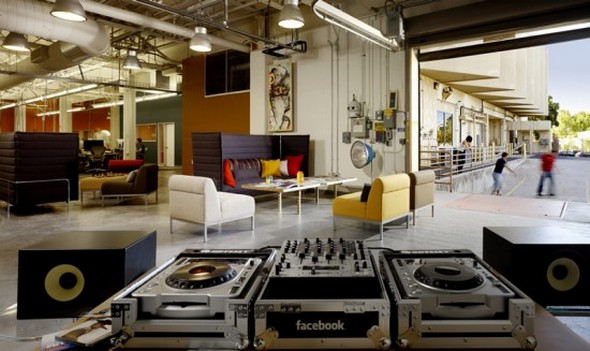
or Facebook:


The emphasis is on creating a fun space for people to work in.  I think that it can be novel and fun to use these spaces, but they have to be functional and not distracting.

What about offices?  Or open-plan desks?  There's been research on this for some time, with some touting the negative aspects of open plan offices and others championing them.  I've worked in both, and find I like the individual office system better.  I like the noise reduction - when I worked in an open-plan office, my desk was quite close to the kitchen, and there would be overflow conversations taking place right behind or beside me all the time!  It was quite distracting.  Another reason I like the office system better is for the ability to personalize and decorate, something I find makes a great conversation starter!  I've turned my office into a bit of a starbase, with a few added comforts like my couch and mini fridge:


Of course, I have a desk too (not shown) and multiple monitors, which makes multitasking easier.  Yes, I do actually get work done in this space!  I think making it comfortable and personalized has made me happier to be there, and thus increased my productivity, too.

How do you make your office your own and do you find that this makes you more productive?  Do you like adding personal touches or do you keep it standard? Do you prefer the open-plan or individual office system?

Tuesday, November 15, 2011

On Productivity

The other day I read an article (thanks for posting, Gail!) on productivity which I thought was pretty interesting.  The article is called, "Time Management: How an MIT postdoc writes 3 books, a PhD defense, and 6+ peer-reviewed papers - and finishes by 5:30pm" and details how to live the 'fixed schedule' lifestyle.

I have to say, it is pretty impressive that Mr. Newport can somehow manage to do everything between 8:30 am and 5:30 pm and keep his evenings completely free, while also fitting in an hour long dog walk and exercise.  And to be honest, I'm still a bit skeptical.  However, I do think there is good advice provided, especially on saying 'no' more often to busy work or work that isn't as important as other tasks.  This is a pretty hard thing to learn how to do, especially as a new or junior employee in industry.

Mr. Newport's observations on his email usage are also interesting.  Rather than constantly reading and replying to email throughout the day, he concentrates the bulk of his email work in a one hour time slot after lunch.  Maybe this is a good way to get back into a concentrated work mode after taking a break for lunch, especially if you experience a 'food coma'!

How do you stay productive at work without working crazy hours?  Do you work on a fixed schedule?  If not, do you think it would be feasible for engineers in the tech industry?  And have you found some good strategies for saying 'no'?

Wednesday, November 9, 2011

GHC11 Day 1 Recap

Today was the first day of GHC11 and it started very, very early for me.  I'm only just finishing my day now (around midnight) so it's been a long one, too.  Here's something like how it went:
  • 5 am: wake up call!  Time to get ready.  Oh, and pack up and check out too, since I could only stay at the Marriot one night (it's a long story*).
  • 6 am: free breakfast time at the hotel!  I was too bleary-eyed to even think about taking a picture.  You'll have to trust me that there were delicious eggs, sausage, muffins, and granola with yogurt.  Oh yes, and coffee (which didn't help).
  • 7 am: MAX train to the convention and Hopper's** meeting.
  • 8 am: Hopper's meeting finished an hour early (?!) so I checked out our recruiting booth in the exhibitor's hall and stopped by the Microsoft attendees' breakfast where I picked up a super cute t-shirt.
  • 9:30 am: After a little over an hour helping the recruiters, it was time for the ABI Ambassadors meeting.  Had a great sync-up with other ladies in industry on what we can do to get better participation from women in future conferences and ABI initiatives.
  • 10:30 am: Time to switch hotels*.  That took until lunch. :(
  • 1 pm: Time for Jo Miller's excellent session on "Building Your Brand as a Technical Expert or Leader".  Read my summary here.
  • 5 pm: Phew!  Speed networking done, time to charge batteries and find some food!
  • 6:30 pm: Time to do my volunteer shift at registration.  Met the awesome Terry O and had a great chat.
  • 9 pm: Time to go home!  Met up with Liyang from SFU who is excited for her interview tomorrow.  
Luckily, Portland's MAX transit system made getting around super easy for me (and free)!
If I had to sum the day up, I would say that today was really about networking and leadership.  I met some really wonderful women, made some great connections, and got some very helpful advice.  Tomorrow there will be more technical sessions, which I'm really looking forward to.  

The great thing about GHC is that there are so many aspects to it, it's really a learning experience that can benefit your career in a multitude of ways, whether you are in academia or industry.  If you don't believe me, as the ~3000 other attendees here this week from all sectors of technology!  Unfortunately, the problem with GHC is that many people don't realize what they are missing.  If you don't go, you won't know you need to know what you don't know.  So go!  

Also, the swag is great. :-)
*I originally planned to come down to Portland on Wednesday morning, so I only booked my hotel for Wednesday to Saturday.  However, since the Hopper meeting was so early, I had to book a room for Tuesday night.  Since my original hotel did not have any space for that night and the second hotel only had space for Tuesday night, I was stuck with having to take both and switch mid-day today.  It wasn't as bad as I thought but did require much use of the MAX light rail system.

**Hopper is the term used for the conference volunteers.  It's a pretty fun experience and a great way to meet other attendees.

Jo Miller on How to Build Your Brand

Today I was lucky enough to be one of 850 attendees at GHC11 to attend Jo Miller's session on 'Building Your Brand as a Technical Expert or Leader'.  She started the session by congratulating us all for taking the time from our day-to-day work to work and reflect on this topic, and I'm very glad I did!

The session was designed to help users identify their ideal career niche and create a personal brand statement, in addition to providing tips on making your brand visible and practice with speed networking.  The advice was very practical and insightful.  For example, attendees were advised to consider brands that are scalable and that evolve as your career does, from entry level through mid-level to the senior level.  Jo asked us to consider where we want to be in two years and five years, and articulate our career plan to our leaders, since they often have access to networks and opportunities that we can't see.  When we tell them our plans, we empower them to make decisions about the people working for them earlier.

Jo also discussed ways to promote yourself.  I especially liked how she encouraged us to promote others. She told that it's just as important to promote others as it is to promote yourself, and I couldn't agree more. I've given friends and colleagues recommendations on LinkedIn, public kudos at work when colleagues were helpful or proactive, and I always take care when writing feedback for evaluations.  If you do these things thoughtfully it reflects on you just as much as the person you are writing about.

Part of the session included a panel of women at different stages of their careers, including Judy Priest, a Distinguished Engineer at Cisco, Ami Khatri, a Web Applications Architect at Massachussets General Hospital, Nehal Mehta, Director of QA at NetApp, and Kiara L. Williams, an Event Program Manager at Microsoft.  Each of the women offered great career advice, such as:

  •  'Build a brand that will stick with you through various jobs and sectors.  Make it consistent and timeless'. ~Judy Priest
  • "Do things you are passionate about.  Don't be afraid to try something new." ~Ami Khatri
  • "If your brand is negative, turn it around.  Document and publish what you do" ~Nehal Mehta
  • "Reflect on what you have accomplished and what you will accomplish." ~Kiara L. Williams

Once you've created your brand, you need to make it visible.  Luckily, Jo provides five steps to doing so:

  1. Work less: work strategically, don't waste time on tasks that don't add the value that your organization really needs.
  2. Communicate your brand: you may need different brands for different audiences.  Try to create a 30s 'commercial'; what's your job title, what are you known for, what do people come to you for?
  3. Have career planning conversations with your leaders: State your intention and ask for their help.
  4. Work hard on the right projects: Women who succeed get demonstrated results.  Choose projects that align with your brand and showcase it, and thatimprove the bottom line.
  5. Promote your accomplishments: You can start small by presenting in meetings, blogging, sending status updates.  Ask to be nominated for awards (advice my mom always gave me!) or ask a colleague to 'toot your horn'.

Sunday, November 6, 2011

Course Review: Presenting Data and Information by Edward Tufte

A few months ago I had the opportunity to attend Presenting Data and Information, a one-day course taught by Edward Tufte.  If you have an interest in user interfaces, HCI, or data analysis, this is definitely the course for you!

The main point Tufte makes is that there is an abundance of poorly presented data that leads to bad business decisions.  He provides many examples, the most convincing being the Columbia shuttle accident, where a risk assessment using data that was ambiguous at best was presented in such a way as to lead NASA engineers to approve the shuttle to land.  The course provides tools and guidelines for analyzing data and presentations, presenting your own data more effectively and convincingly, and analyzing the design of the interfaces we work on so that we can make better business decisions.

Tufte opens the day with a visualized piece of music, like this one:


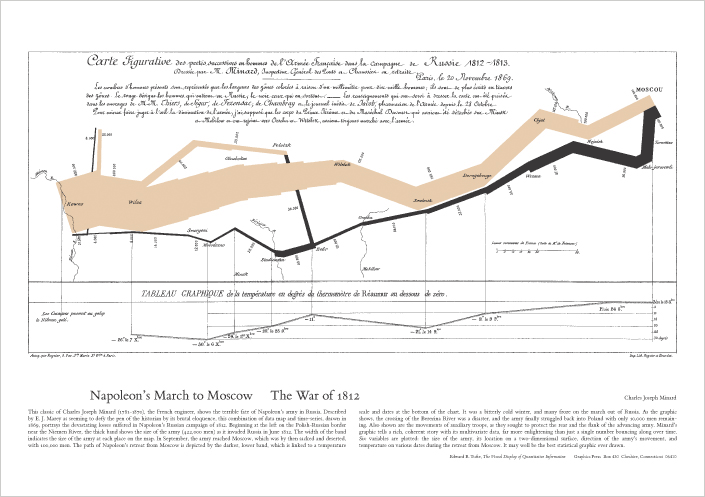
This is used to illustrate how including multiple types of information in a single graphic/visualization can be much more useful than what is usually done - narrowing down information until we have only one or two metrics shown.  Here the visualization helps the consumer distinguish the different instruments heard, the length of the notes, and value of the notes themselves (a low C from a middle C, for example).  This theme occurs again and again throughout the course - Tufte also uses the Minard Map as a good example of how to visualize multiple data points and metrics in a single place:


Edward Tufte has a reputation for disliking Powerpoint (OK, he did write an article on how it is 'evil'...).  He has a section on this in his course, but to me it seems his dislike is not so much for the tool itself as much as how it is used.  Specifically, he states that the problem is:
  • people often show too little data on slides (due to the limited space they provide)
  • many people simply re-read the bullet points when presenting, rather than supplementing them with additional information
  • powerpoint slides can be dictatorial/autocratic: the leader often reads the info to the audience, but the audience doesn’t have the notes/background material that went into creating the slides, only what is presented on them
Of great interest to me was the section of the course on mobile interfaces.  Most notably, Tufte has provided some criticism on both iPhone and Windows Phone 7.  He appears to like the former much more than the latter.

There are some really nice things about how Tufte presents the material in this course.  First, I like that he shows pictures and talks to/about them, rather than showing bullet points and reading from them.  The course ends up much more like a dialogue than like a lecture because of this.  Second, students are given all four of Tufte's books on data visualization, which is a great resource that helps continue attendees' education well after the course has ended.  Finally, Tufte uses all four books liberally throughout the day, so attendees get a good overview in the content contained in each; now when I have a question or point of interest I need to look up, I have a better idea of where to find the answer in his books, which has saved me a lot of time since.

Overall I would highly recommend this course.  The training on presenting data is very useful - I've implemented his recommendations and received positive feedback on several of the reports I wrote using it. The information on layouts and interfaces was also very helpful.  My one hope is that more technical people outside of user experience designers and researchers find the time to attend - engineers of all sorts, from developers and testers to Q/A engineers could all benefit.

Thursday, November 3, 2011

Confidence Builders at Work

Today I came across this article on how to build your confidence at work and it reminded me quite a bit of the 'Imposter Syndrome' session hosted by Maria Klawe that I attended at GHC09.  I think the advice provided can be useful to many people regardless of their confidence level or gender!

My favorite piece of advice was #3 on the list, "Keep Track of Successes", which advises keeping a list of even your smallest 'to-do's during each day and crossing them off as you go.  I like this because it helps me realize how much I do during the day, even if I don't feel like it was very productive, but also because when it comes to setting commitments for the year or doing self-evaluations, I have a lot of data to include and show off.  

One problem, however, is that a million little 'to-do's at 9am can seem overwhelming!  So, sometimes I find it helpful to only write down big items, and if I finish some small ones only include them once they are complete.

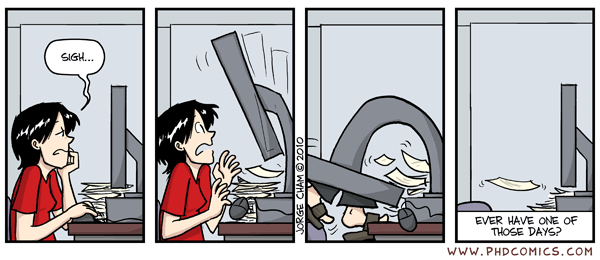
Another tip I've learned for particularly daunting days is to leave something small and easy to accomplish for the  end of the day, and quickly finish it.  This way I always leave feeling like I completed something, even if it was the only thing and I am still blocked on everything else.  I like leaving on a positive note, and not like this:

Friday, July 8, 2011

Two Years!

Yesterday was my second anniversary of working full time for Microsoft. It has been an awesome two years that seem to have flown by, but at the same time it feels like I've been here for much longer (in a good way)!

One of the things that is so cool about my job is that while I have plenty of opportunities to work on cutting edge technology, I also get to do things outside of straight-up engineering, such as:
  • helping with recruiting efforts
  • mentoring college students
  • product design and planning
  • pie-in-the-sky prototyping
  • taking fascinating training
and the list goes on! I'm still excited to come to work every day and hope there are many more years to come. :)

Wednesday, August 25, 2010

Last Year Recap & Takeaways

I've been working for just over a year now, after completing my Master's, and it struck me that I never marked this with a blog post. It's been a pretty eventful year in which I:
  • moved off my mountain (and out of the country, again)
  • started a career in software testing and tried my hand at a little recruiting
  • visited Europe for the first time
  • read a lot, and
  • learned to play ultimate (well, still learning).
I still have tonnes to learn (note how hard I'm clinging to my Canadianisms), but I do have a few takeaways from my experiences so far:
  • Don't be afraid to keep telling your ideas to people who will listen, even just informally. Use these discussions to keep refining them and don't give up if you think they are interesting. Eventually, it may pay off!
  • It's easy, when starting out, to get sucked into the minutiae of your daily tasks. Try to keep an eye on the 'big picture' and what's going on around you. Maintain your vision!
  • Take advantage of slow times to rest and gear up for the hard times, because there will be lots of them. No one can keep a pace of 10-12 hour days, 6 days a week forever without burning out! Keep going to the gym, get up from your desk regularly, and meet your friends for lunch. Work hard the rest of the time (and keep the 6 day weeks to a minimum). :)
Of course, I'm guilty of not following my advice on many occasions... but I've seen how these things can pay off so I try to keep reminding myself to stick to them anyway!